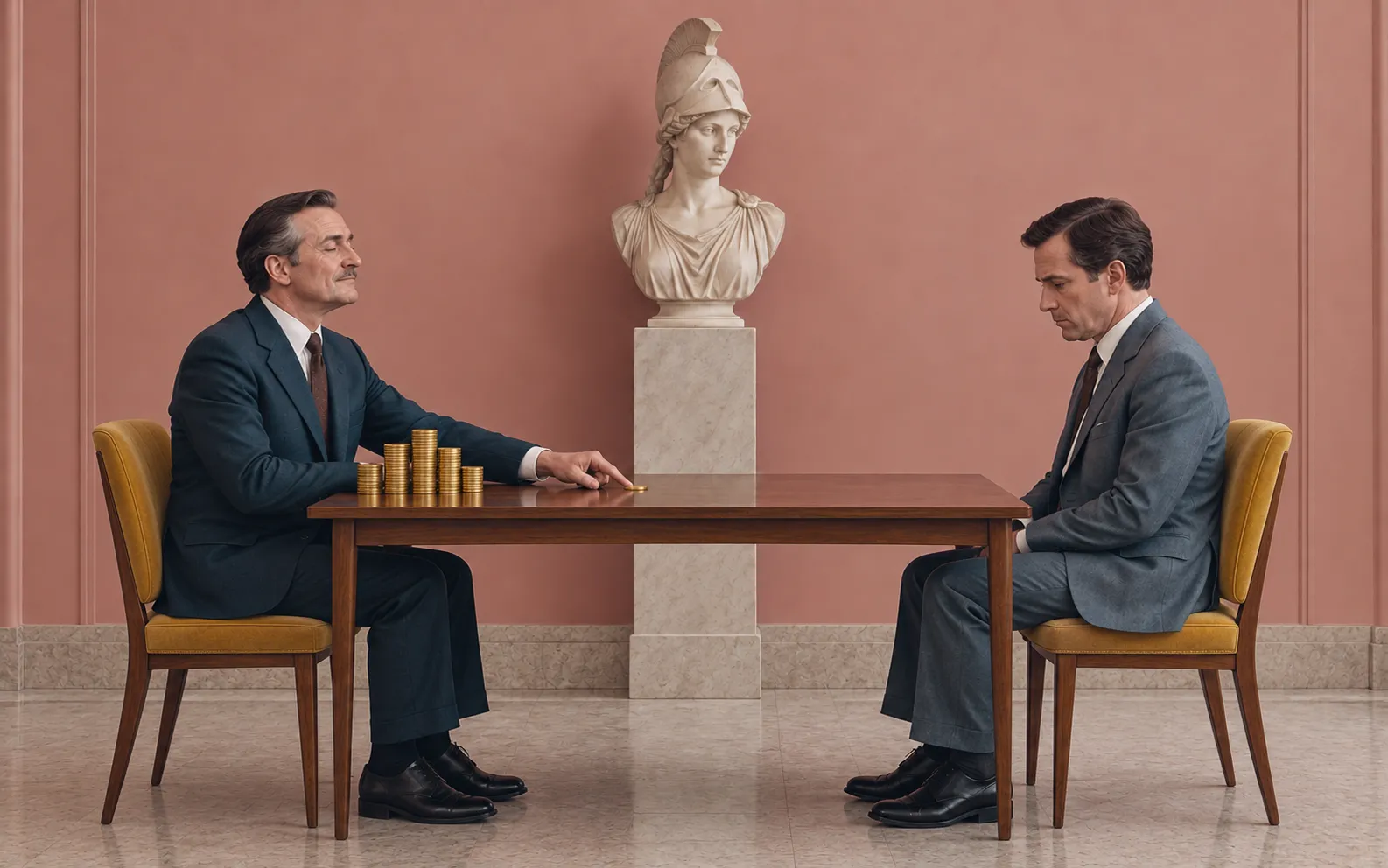
There is a special kind of political generosity in threatening to take your entire lunch, then accepting the sandwich and expecting thanks for leaving the napkin. The public objects. The minister listens. The proposal is revised. Somewhere between the press conference and the revised wording, a demand that needed justification becomes a concession deserving applause.
The technique has a name: door-in-the-face. In experiments published in 1975, Robert Cialdini and colleagues found that an excessive request, followed by a smaller one after rejection, could increase compliance with the smaller request. The apparent concession invites a concession in return. In politics, the danger is obvious: citizens may reward a government for retreating from a position it had no business occupying.
Anchoring supplies a related advantage. An initial figure can pull subsequent judgments towards it. Demand a fantastically large levy, and the argument starts orbiting that number. The eventual compromise may remain absurd, but it now wears sensible shoes. The Overton window describes the broader range of politically acceptable positions; it is not the precise name for this manoeuvre. Door-in-the-face is the closer fit.
Germany’s current argument over taxing artificial intelligence offers an occasion to watch carefully. On October 13, Digital Minister Karsten Wildberger advocated taxing AI revenues to finance changes in the labour market, then emphasised growth first. On October 29, Karin Prien backed taxation of value created predominantly through AI. Reporting also recorded disagreement within the government and no concrete coalition plan.
That distinction matters. A proposal, a retreat and another politician’s endorsement do not establish a coordinated deception. Nor has a diluted tax already slipped into law. Political disagreement can produce the same choreography as manipulation. There is no need to invent a secret meeting when several ministers and a microphone can produce sufficient confusion independently.
Still, the fiscal imagination is impressive. Before the public has been shown a workable account of what the proposed tax would capture, the proceeds already have a worthy destination. The answer arrives wearing a ministerial badge; the question is still looking for the room.
Imagine a manufacturer using AI to reduce waste, a translator using it to draft, and a software company selling model access. What exactly would unite their taxable activity? Revenue, profit, automation, displaced employment, computational consumption? Each answer describes a different instrument with different consequences. Calling all of them an AI tax is rather like announcing a transport policy called “wheels”.
There are serious arguments for ensuring that technological gains support public services and workers facing disruption. Those arguments deserve definitions, evidence and an explanation of who ultimately pays. A minister need not understand every neural network. A minister proposing a new tax should understand the proposed tax. Apparently this is now a demanding qualification.
Would ancient Greece have recognised the performance? Aristophanes certainly recognised its personnel. In The Knights, first performed in 424 BCE, a sausage seller’s lack of education becomes a recommendation for political advancement. Shamelessness and noisy persuasion are treated as professional assets. This is comedy, not a statistical survey of Athenian officeholders, but its survival suggests that the joke has enjoyed excellent institutional support.
The sausage seller at least understood sausages. Our hypothetical modern equivalent commissions a strategy on meat, announces a National Protein Transformation, and taxes the smell of lunch. When challenged on the methodology, he explains that society cannot afford inaction. The missing methodology is thereby promoted into a moral imperative.
Thucydides provides a darker episode. In 427 BCE, Athens voted to kill Mytilene’s adult men and enslave its women and children after a revolt. The next day, the assembly reconsidered. Diodotus persuaded it to reverse the collective punishment; a second ship raced to stop the first order. Athens nevertheless executed prisoners identified as leading rebels and imposed severe penalties.
This was a substantial reversal, not a cosmetic discount. Thucydides gives us no basis for calling the original atrocity a calculated opening bid. Indeed, Cleon defended it during the second debate. The episode demonstrates democratic reconsideration and the brutality that could survive it, rather than proving an ancient version of today’s suspected sales technique.
Its relevance lies in the standard of judgment. A decision must be assessed on its own merits, even after something much worse has been withdrawn. Relief is understandable. Gratitude is optional. Scrutiny remains compulsory.
That principle is especially useful when the softer proposal finally arrives. A narrower scope, a lower rate or a later start may improve a policy. None supplies the missing argument for introducing it. Citizens should compare the revision with the existing situation and credible alternatives, rather than exclusively with the minister’s opening extravagance.
Otherwise, consultation becomes an elaborate exercise in obtaining consent through exhaustion. The public spends its energy defeating the spectacular version. The durable version enters quietly, carrying a folder marked compromise. Everyone claims to have listened. Only the invoice retains its original confidence.
A functioning democracy must allow politicians to change their minds. It must also allow citizens to notice when the change concerns packaging more than substance. The test is whether the surviving proposal is clear, justified and proportionate, with burdens that its sponsors can explain.
Until then, the appropriate response to a smaller unjustified demand is another refusal. Knowing little about the thing being taxed is no achievement. Knowing exactly how to collect the money does not make up for it. The tax office should not be the government’s substitute for a philosophy.


No comments yet