
At nine, you are supervising six artificial intelligences. At ten, you enter a project where artificial intelligence is forbidden. By eleven, the only intelligence showing signs of deterioration is yours.
This was not quite the future advertised. The machines were supposed to take over the tedious work, leaving us free to think, create, and occasionally experience daylight. Somehow, daylight has become the thing visible behind the terminal window, indicating that another deadline has arrived.
The strange part is that the tools can be useful. They fix bugs, produce drafts, explain unfamiliar systems, and make previously impractical ideas worth attempting. Scientists, consultants, programmers, and salespeople can now accomplish things that once required considerably more time or help. The difficulty begins when every newly possible thing becomes something we ought to do before lunch.
Consider the modern knowledge worker, enjoying unprecedented assistance. One agent is investigating a defect. Another is drafting a proposal. A third is refactoring something whose original purpose now requires an archaeological investigation. Several others are working in background tabs, quietly converting yesterday’s enthusiasm into today’s obligations.
Each will eventually return with results, questions, or the confident announcement that everything is complete. This last category requires particular attention.
We have learned to parallelise production. Understanding remains inconveniently personal. Someone must read the proposal, check the analysis, inspect the code, and establish whether the impressive answer addresses the actual question. That someone generally has one brain, which was already handling the calendar.
There is a managerial dimension to all this that the cheerful demonstrations tend to omit. Delegating a task creates a relationship with an unfinished task. Multiply that relationship by ten and you acquire a small department, including its supervision requirements, without acquiring an assistant, a budget, or the authority to cancel the quarterly meeting.
Nor does faster execution necessarily produce a quieter day. It can simply shorten the interval between decisions. Work that once involved a sustained stretch of making something becomes a sequence of interventions: approve this, clarify that, investigate the unexpected improvement. You finish the afternoon having made dozens of judgments and with very little sense of having inhabited a thought.
Then comes the project where AI is prohibited.
The transition can be abrupt. A moment ago, you were coordinating an electronic research institute. Now you are manually restructuring a document, with the peculiar awareness that assistance exists, works reasonably well, and must remain outside the door. It is rather like owning a dishwasher while accepting commissions that require historically authentic washing-up.
Yet the restriction may be entirely justified. A client’s confidential information is not ours to place wherever convenient. Sensitive research, contractual obligations, security requirements, and the need to demonstrate independent competence can all impose legitimate limits. Sometimes the approved tools cannot provide the necessary safeguards. Sometimes the work itself is intended to establish what a person can do unaided.
Those distinctions deserve respect. They also deserve precise policies. A restriction tied to identifiable risks is easier to understand than a sweeping declaration whose interpretation changes according to who attends the meeting. People need to know which tools, data, and activities are covered. “Please exercise judgment” becomes less helpful when exercising judgment is what might breach the contract.
Fairness also requires an honest timetable. Work performed under different constraints needs to be estimated accordingly. If a project requires unaided analysis, that is part of its specification. Expecting the speed of automated production while requiring manual methods is an ambitious procurement strategy. The missing resource is usually supplied by someone’s evening.
Moving between these environments adds another responsibility: remembering which working rules apply. Before solving the problem, you establish which methods are permitted. A routine task acquires a small preliminary hearing.
Meanwhile, the unrestricted projects keep multiplying.
Here lies the uncomfortable part: enthusiasm can drive the expansion. Curious people have accumulated years of ideas deferred for lack of time, money, or technical ability. Suddenly the backlog looks achievable. That neglected dataset, useful little application, alternative analysis, or improved customer presentation becomes a plausible evening activity.
The resulting exhaustion can arrive wrapped in genuine satisfaction. You did build something worthwhile. You also opened four more projects while building it. Productivity has become very good at reproducing.
Competitive pressure makes restraint harder. Once a faster turnaround becomes possible, it can become expected. A particularly productive afternoon establishes a precedent. Nobody formally announces that your best day is now the minimum acceptable day; the calendar gradually communicates the decision.
What would improvement look like? Some of the gains would have to survive as gains: time to inspect an argument, fewer simultaneous commitments, an earlier finish. Teams would need to count review and coordination as work. Clients would need schedules that reflect their restrictions. Individuals would need permission, including their own, to leave interesting possibilities unexplored.
This involves a surprisingly difficult admission: available capacity does not create an obligation to use it. We accept this with most possessions. Nobody stands beside an idle vacuum cleaner feeling that the household is falling behind.
A useful machine should be allowed to finish its assignment. Its owner should be allowed to do the same. There will always be another draft, another experiment, another improvement that has become tantalisingly affordable.
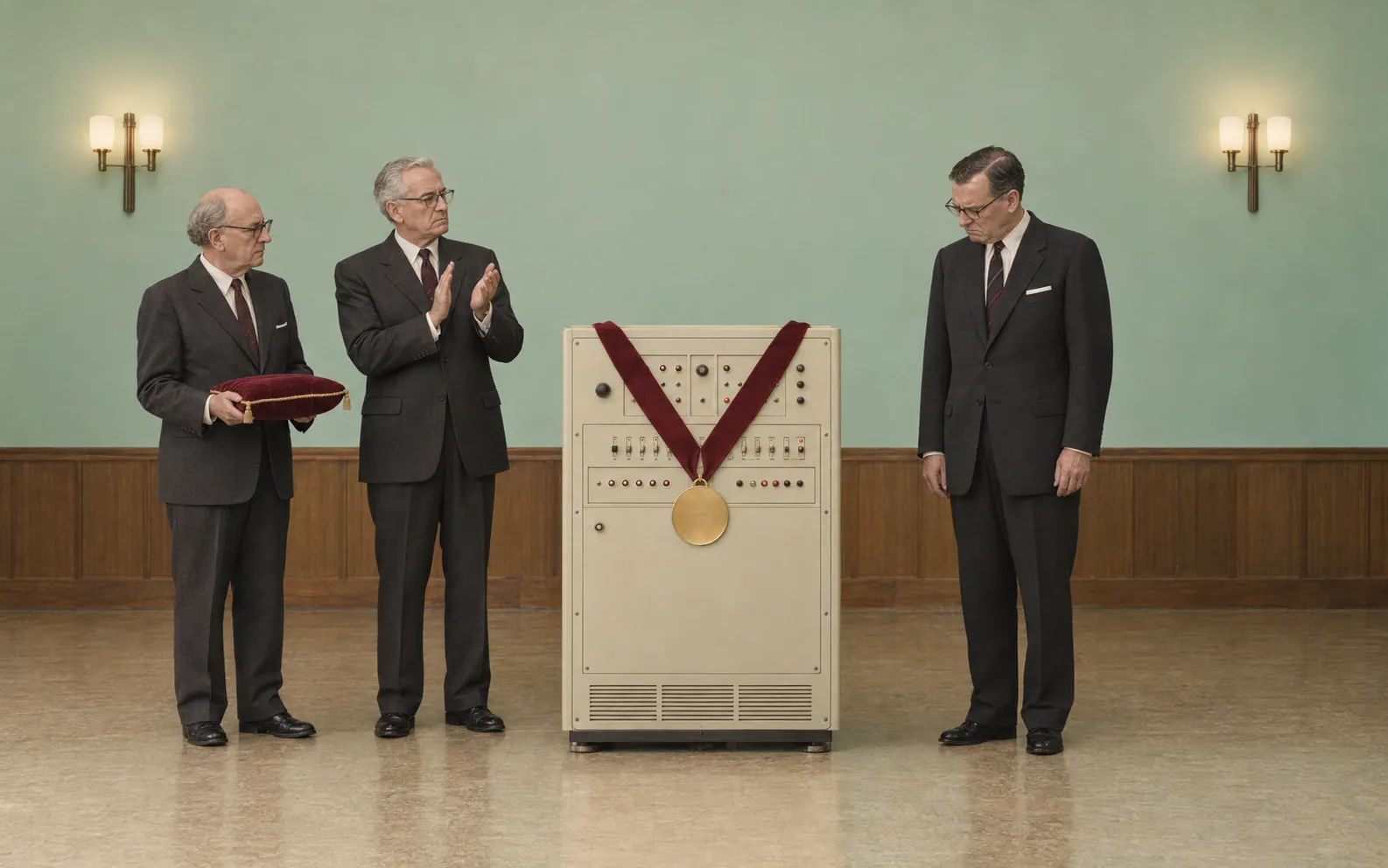
At some point, the agent reports that it has completed the task and is awaiting further instructions.
Leaving it waiting may be the most important instruction of the day.


No comments yet