
AI Consciousness: An Impossibility Theorem Without the Theorem
Lerchner argues that computation only simulates consciousness. But his proof confuses abstract descriptions with the causal powers of physical machines themselves.
20posts
Lerchner argues that computation only simulates consciousness. But his proof confuses abstract descriptions with the causal powers of physical machines themselves.

Lanyon AI combines language models with formal verification - and asks whether, in an age of abundant code, scientific software should finally arrive with proofs.
BEACONS offers a model for reliability that AI systems badly need: explicit bounds, checkable guarantees, and less benchmark theater.

New interpretability work suggests assistant behavior may be a geometric direction in model space, making persona control more concrete than branding.

A new AI-assisted algebraic geometry result raises the stakes for language models as collaborators in genuine mathematical discovery.

Context engineering and requirements engineering converge, suggesting better ways to specify AI-assisted software before code is written.

Google's DORA findings suggest AI amplifies team quality: strong practices get stronger, broken processes get louder.

More thinking can make both humans and models worse, revealing when deliberation becomes noise rather than wisdom.

A tour of artificial intelligence in literature, from ancient automata to modern science fiction's uneasy machine minds.

Dune's Butlerian Jihad is used to ask whether today's AI race is replaying old fears about dependence on machines.

AlphaEvolve suggests algorithmic discovery may reshape science and industry by evolving solutions humans would not design directly.

Uncensored models promise creative freedom and research access, but also expose the tradeoffs that safety layers usually conceal.

Saturation appears across markets, research, and models, revealing what happens when growth hits limits and novelty thins out.

The Nobel recognition for protein-folding AI becomes a story about how machine learning cracked a central biological mystery.

The post warns against an AI cargo cult that confuses impressive mimicry with the harder problem of genuine intelligence.

LLM steerability is treated as both craft and control problem: how to guide powerful models without losing the plot.

A practical introduction to KNIME and the shift from fragile spreadsheet work toward reproducible data workflows.
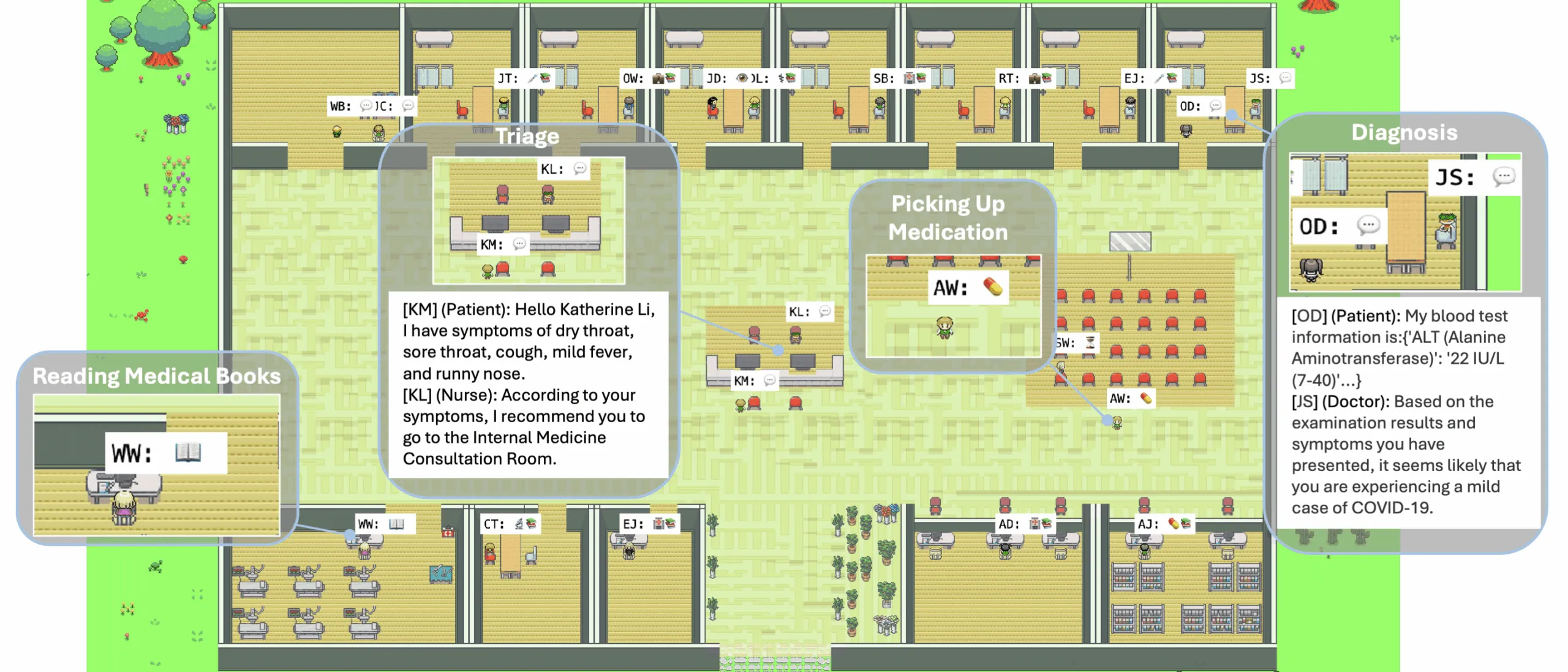
Decentralized multi-agent systems promise problem-solving without a central boss, but coordination becomes the real challenge.

Multi-agent LLM systems are explored as a path toward distributed reasoning, specialization, and collaborative AI workflows.

The Retro Sci-Fi Linguist GPT is introduced as a tool for exploring early utopian fiction and translation between English and German.